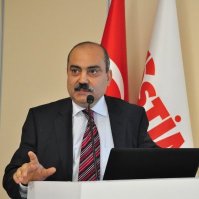
The Success Story of MEDEL Elektronik and Its Founder Niyazi Sarımaden – Dr.İlhami Pektaş
Founded in 1994, MEDEL Elektronik Inc. has delivered more than 400,000 products manufactured at its production facility in Istanbul to customers worldwide through its sales and marketing network operating not only domestically but also across Asia, the Middle East, and the Balkans. With a workforce of 120 employees—including 35 engineers and 70 technicians—MEDEL Elektronik operates in a total indoor area of 7,700 square meters across its Istanbul and Adapazarı branches. The company manufactures electronic measurement and control boards required for AC Motor Vector Speed Control, DC Motor Speed Control, Railway Applications, Shipyard Applications, Edge and Tension Control, Camera and Register Control, Automation and automation applications, and has been delivering industrial automation solutions backed by 25 years of experience. Since 1999, Medel has been developing projects in the railway sector and has made significant contributions to the national railway industry by delivering numerous domestic and national products such as Battery Charger Units, High-Frequency Battery Chargers, Power Supply Units (PSU, Static Converters), UIC Multi-Voltage PSU Converters, Electric Train Auxiliary Inverter Systems, Air Conditioning Units, E72-220 Inverters, D72-24 Converters, Vacuum Toilet Systems, Clean and Waste Water Tank Automation, Automatic Door Revision Systems, Passenger Announcement and Passenger Information Automation systems, and more.
MEDEL Elektronik founder Niyazi Sarımaden tells his success story as follows:
We Pioneered Several Firsts in Türkiye by Manufacturing Electronic Components of Machines
“We produced a domestic version of a camera that was being imported for €30,000 for only €4,000. As a domestic manufacturer, we produced thousands of converters for €20,000 each, whereas TÜVASAŞ had been purchasing them for €55,000 in the late 1990s. For industry, we have manufactured over one hundred thousand units of AC and DC motor controls ranging from 0.75 kW to 2000 kW entirely with domestic and national capabilities.
Thanks to the products we developed, we created a competitive environment against imported products. Importers will no longer be able to sell at any price they wish; while our manufacturers procure products at lower costs, foreign currency outflow from our country will also be reduced. We are conducting intensive R&D activities and currently hold 13 utility models and 2 patents. In addition to the rail sector, we have developed critical products for plastics and paper, heavy industry machinery, iron and steel plants, the defense industry, and railways.”
Could You Introduce Yourself?
Niyazi Sarımaden: “I was born in 1963 in Refahiye, Erzincan. I completed primary school in my village. I passed the entrance exam for the state-funded boarding teacher training school, which had replaced the Village Institutes. I attended Pamukpınar Teacher Training School for both middle and high school. After graduating from the Higher Technical Electronics Teacher Training School, my dream of going abroad came true while I was preparing to become an electronics teacher in vocational high schools.
It was 1984. When I went to Italy, we purchased machines from Italy for a company in Türkiye called İstanbul Çorap, which was producing socks. I undertook the electronic dismantling and reassembly work of the machines to be imported into Türkiye. While installing the machines, I observed that one of the most critical electronic components was the DC motor drives. I witnessed that these electronic components failed very frequently, causing serious production losses due to repeated production stoppages.
Repairing the inverter and sourcing spare parts was a major challenge on its own. I began asking myself, ‘Can I manufacture the DC drive here in Türkiye?’ I first examined the existing devices coming from Italy and decided to produce the DC motor drive. It was early 1985. Meanwhile, I continued working at the factory as a technical staff member.
Living as a tenant in a city like Istanbul was very difficult; I had to earn a living and stay afloat. I first purchased a 100 kHz oscilloscope and began gathering the components required for a device. I developed a product and researched the market position of the product I had developed (DC motor speed control). It was truly a product in great demand, and all of it was being imported at very high prices.
I realized there was a significant gap in this field in our country. When I saw that no one was doing this work, I made my decision: ‘This will be my business.’ Fortunately, both our factory manager Mr. Adnan and my employer provided great support. We replaced all DC drives available in the factory. I said, ‘I may become the first company.’”
Did You Decide to Manufacture the Electronic and Electrical Parts of Machines Domestically?
Niyazi Sarımaden: “The 1980s were years when Turkish industry and machinery development accelerated significantly. It was a period when technology was limited and we were importing almost everything. The machinery sector was advancing rapidly. Plastic machinery manufacturers, in particular, had made substantial progress. However, such machines required speed regulators; without soft starters, when motors started at high RPM, it could cause machine failures or even mechanical damage. Therefore, I recognized the serious need for drives and adopted DC motor control—power electronics—as my profession.
Together with our senior colleague Fikret Tomar, we developed the DC motor controller product. We manufactured DC drives ranging from 0.75 HP to 1000 HP. When we developed DC motor drives, we also realized the need for DC motors, which we initially supplied from ship-recovered motors. For this reason, we began manufacturing DC motors in 1989, producing units from 0.75 HP to 150 HP. Our long-standing partnership with Fikret Tomar ended in 1993, and I established Medel Elektronik. Motor manufacturing remained with Fikret Tomar, while motor controllers remained with me.
Alongside DC motor control, I began working on machine automation. Within machine automation, we developed and manufactured edge control, tension control, and quality control cameras required for plastic, packaging, paper, and textile machinery.
In the early 1990s, the rapid development of microchip technology accelerated the production of new semiconductor components in power electronics. Semiconductors such as IGBT and newly emerging microchips (such as CPUs) enabled us to develop new electronic products. Thanks to this advancement, DC and AC motor speed controllers began to be widely used. During this period, I accelerated my R&D work for AC motors. I produced my first AC motor controller in 1995. There was again a significant gap in the market. We leveraged this gap and moved into AC motor drive production. We initially started with single-phase devices (0.75 kW–2.2 kW), and later produced three-phase starters. Today, we have motor speed controllers operating at 2000 kW (2 MW). As technology advanced, I continued developing inverter and asynchronous motor inverter production. Following the asynchronous motor controller, we developed the servo motor inverter.
I began manufacturing servo motor controllers and produced various motor controllers for the market. In 1998, I first met the railway team. I met four engineers working at TÜRASAŞ: Hasan Bayhan, Burhan Türk, Murat Afşin, and Muhammet Bayır.”
TÜRASAŞ had transitioned to the production of electric passenger coaches and had manufactured nearly 100 units. However, the converters used in these coaches had been procured from abroad and were experiencing serious problems. The institution stated that they were unable to cope with the failures and spare parts issues, and that they were paying millions of euros abroad each year. They requested assistance in addressing this matter.
When I listened to them, I felt an indescribable excitement rising within me. Because I had had a dream for years:
I wholeheartedly believed that we could produce, with our own hands and our own engineers, the technologies that could not be manufactured on this country’s soil, in a truly local and national way, and the four engineers standing before me shared the same spirit.
The Same Excitement, the Same Belief, the Same Idealism…
Like me, they also wanted to manufacture even the most critical components of every electric passenger coach produced by TÜRASAŞ in our own country, using our own expertise.
This togetherness, this shared belief… It was a feeling that filled one with pride, hope, and a sense of responsibility. We were not just intending to produce a product; we aimed to contribute to this country’s future, its independence, and its engineering legacy. Being a part of that was an indescribable honor for me.
With these feelings, we first manufactured the necessary inverters. Then, with the significant contributions of these four colleagues, Nuri Sezer—who was the Head of R&D at the time—my late manager Gürman, the Director of the Electric Factory, and several TÜVASAŞ employees whose names I cannot recall, we produced our first unit of the Auxiliary Power Unit (APU).
We carried out its testing in our own factory. However, since we did not have a project completion certificate, it was required to connect it to a passenger vehicle for one summer and one winter and operate it for a full year. In practice, we connected the converter to a passenger coach; it ran for one summer and one winter. During its operation, we observed the problems that arose and resolved them.
We presented our product to TÜRASAŞ:
We domestically and nationally produced for TÜRASAŞ approximately 1,000 converters, each rated at 100 kW, with a single-phase input of 1250–1920 VAC and outputs of 380 VAC, 220 VAC, and 28 VDC for batteries.
We produced 150 converters for TÜRASAŞ designed for international use, with inputs of 3000 VDC, 1500 VDC, 1500 VAC 50 Hz, 1000 VAC 16.6 Hz, and outputs of 380 VAC, 220 VAC, and 28 VDC.
We established an R&D team to develop the products we had manufactured. Initially, our R&D team consisted of three people, and by 2005 it had grown to 20 members. Whatever devices were needed for the railways, our R&D team began working on them. We developed climate control devices and, for years, produced climate control units for companies such as TÜRASAŞ, Safkar, and Yazkar. The software, hardware, and design of these products were entirely carried out by Medel engineers. Nearly 2,000 units were produced, and they are still in use on railways and metro vehicles.
In 2008, We Completed the Auxiliary Power Unit (APU) R&D for Metro Vehicles and Began Production
We manufactured air conditioning, compressor, and battery charger converters for 22 trams (Škoda vehicles) used in the Konya rail system. Before entering the railway sector, our total workforce—including white-collar staff—was approximately 70. After we began working for the railways, our personnel increased to 140, consisting of 35 engineers and 105 blue-collar employees.
In 2008, TÜRASAŞ was set to produce 84 DMU vehicles. These vehicles required vacuum toilets; however, no company capable of manufacturing this product could be found. At that time, Mr. İbrahim, the General Manager of TÜVASAŞ, invited me to the factory.
He said “We have not been able to have the vacuum toilets manufactured by anyone. We would like your support on this matter. You are producing many products for the railway sector—if anyone can manufacture this, it is you.”. At that time, we were also seeking new projects for our railway team because some years were very busy while others had almost no work. Therefore, without delay, we began working on the product. First, we obtained a license from Glova and manufactured vacuum toilets for 84 DMU vehicles under the Glova license. Subsequently, we produced vacuum toilets entirely with domestic and national capabilities for the following 124 DMU and 300 TVS passenger vehicles. I later transferred this product to a German company together with the know-how and returned fully to our core expertise in power electronics.
In 2008 and 2009, the rail systems sector gained significant momentum. There was especially a great deal of activity in metro and tram vehicles for urban passenger transportation. However, there was a major issue: metro and tram vehicles were almost entirely imported, and domestic manufacturers were given very limited opportunities. As a result, we were not receiving sufficient work.
Our only customer in Türkiye at the time was TÜRASAŞ, and being aware of this situation, we continued developing new products. During this period, we developed a 50–90 VDC input / 220–380 VAC output inverter for use in locomotives. Over the years, we manufactured and delivered nearly 1,000 units to the TÜLOMSAŞ Locomotive Factory.
At the same time, we continued improving the AC inverters we produced for industrial applications and maintained uninterrupted R&D activities. We developed static converters for shipyards. We produced converters with 1500 kW – 380V / 50 Hz input and 440 VAC 60 Hz output specifications. By connecting 500 kW, 750 kW, and 1000 kW inverters in parallel, we developed 4 MW (4000 kW) inverter systems. All of these products were realized within the scope of TÜBİTAK projects.
In 2012, our company was invited to the railway symposium organized by Bursa MÜSİAD. The Minister of Transport and the Minister of Industry also attended. After all speakers completed their presentations, Prof. Dr. Sedat Çelikdoğan took the floor during the Q&A session and delivered a remarkable speech. That was where I met him.
He explained—powerfully and sincerely—what domestic manufacturers needed, why local production was indispensable for national development, and how investments would ultimately fail without it. The audience gave him a standing ovation.
When he stepped down from the podium, we had the opportunity to meet him. He told us:
“If you want to secure the future of this country and your children, we will unite our strength. Whoever produces even a single domestic component in the rail sector—let us meet this Saturday at Ankara OSTİM. We will establish a cluster and struggle until we achieve full independence in domestic and national industry.”
May he rest in peace. On Saturday, through the efforts of ARUS Coordinator Dr. İlhami Pektaş, approximately fifteen companies gathered at OSTİM. We met OSTİM Chairman Orhan Aydın, another patriot devoted to the country, who opened all OSTİM resources to us. With strong domestic and national motivation, we began the process of convincing the bureaucracy. These efforts took several months, and fortunately most institutions were persuaded.
As a result, in 2012 we succeeded in adding a 51% local content requirement to the tender specifications for 324 metro vehicles in Ankara, which had been awarded to the Chinese company CSR. This decision was revolutionary not only for the railway sector but for many industries. I would like to thank, in particular, then Minister of Transport Binali Yıldırım and all bureaucrats who contributed.
Within this framework, Medel undertook the APU and braking resistor work for the 324 metro vehicles to be delivered to Ankara and transferred the project to CSR. The project was completed in 2018, and the metro vehicles continue to serve Ankara today.
Due to the crisis our company experienced in 2016–2017, we relocated our factories in Adapazarı and İkitelli to the Tuzla Leather Organized Industrial Zone. We now manufacture new products in a facility with 6,500 m² indoor and 1,500 m² outdoor area.
In 2018, a consortium was formed consisting of TÜRASAŞ, TÜBİTAK, MEDEL, SAVRONİK, and SÖNMEZ TRAFO. MEDEL undertook the R&D and production of the APU converter for the E5000 electric locomotive project. We began product testing in 2022 and successfully completed the first locomotive-mounted tests that same year.
As of 30 November 2025, 20 locomotives are in service with TCDD. TÜRASAŞ has started production of 95 new locomotives, and MEDEL is manufacturing the APU units for these 95 locomotives. The software, hardware, and design of all these products were developed entirely by Medel.
In 2023, we also produced air-conditioning converters for the Spanish company HISPSCOLD for 56 HITACHI metro vehicles to operate in Turin, Italy, and 88 HITACHI metro vehicles to operate in Naples, Italy. These products are currently operating in Italy without any issues.
In 2025, with the support of Istanbul Metro and the Ministry of Industry and Technology, we are manufacturing the traction converter and APU for 34 tram vehicles (TRAM34) under the SIP Project. All deliveries will be completed by the end of 2026.
All products mentioned above have been realized by Medel engineers and technicians. The software, hardware, and design belong entirely to Medel.
In 2024, we will commission the “Forty Thousand Ampere – 40 VDC” converter developed for Roketsan by the end of 2025. For the defense industry, we continue producing the Hızır crane system used on warships for ASELSAN.
We Are Actually a Power Electronics Company.
We are fundamentally a power electronics engineering company. From industrial motor control to converters for railways, traction inverters, DC inverters, and marine static converters, we design and manufacture the full range.
All products we manufacture are tested using the test systems available in our factory. Our test equipment is not accredited; however, all systems are designed in compliance with accredited equipment standards.
For example:
- Our climate test chamber operates between –40°C and +80°C,
- Our rain test system tests every converter operating in outdoor conditions with pressurized water and rainfall simulation,
- Our load and voltage test systems range from 100 kW to 500 kW and support inputs of 4500 VDC, 4000 VDC, 3500 VDC, 3000 VDC, 1500 VDC, 1000 VDC, 750 VDC, as well as 1500 VAC and 1000 VAC,
If requested by the customer, we also perform product tests in accredited laboratories.
We hold utility model or patent rights for all products manufactured under our brand. We have 13 utility models and 2 patents. We have not developed any product by copying other companies; all have been produced based entirely on our own ideas and engineering.
As of 2025, I have completed 40 years of professional and business life. I have retired nearly 250 employees and trained close to 2,000 engineers, technicians, and interns. All products described above were manufactured with our domestic and national capabilities. Currently, we have specialized our 110 white- and blue-collar employees in these product lines.
I have also raised three children for the future of the company:
- Alişan: M.Sc. Electronics Engineer
- Zeynep: Economist with a master’s degree
- Hüseyin: Architect Engineer
The essential matter is ensuring that the domestic and national synergy we have created is sustained by the next generations with the same belief and determination. Because we know that the true independence of a country is only possible when it can produce its own technology, develop its own engineering, and sustain its own industry.
Every product we depend on from abroad represents lost strength for our future and a missed opportunity for our children. Therefore, growing domestic industry is not merely a commercial activity for us; it is an engineering duty, a national responsibility, and a moral obligation to our nation and future generations.
Whatever was necessary for Türkiye to build an industry rising through the intellect, knowledge, and hard work of engineers trained on these lands—we did it yesterday, we are doing it today, and we will continue to do so tomorrow.
This path has sometimes been difficult and has required patience; however, at every step we have seen that we are on the right track. This belief and determination have carried us to a stronger position both in the domestic market and internationally.
Thankfully, today we are not only growing with the domestic and national synergy we have built but also advancing rapidly toward becoming a global brand.
With our engineers, technicians, workers, and entire team, the determination we demonstrate is the clearest proof of this.
As individuals raised with the resources of this country, we know our duty is not yet complete.
We will continue working to pave the way for the young people who will take over this flag after us, to leave them a stronger legacy, and to further strengthen domestic industry every day.
And with this belief—with the same determination and the same excitement—we continue on our path.