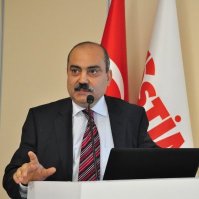
The Importance of Rail Systems in Türkiye’s Transportation Vision- Dr. İlhami Pektaş
Transportation is the lifeblood of a country’s economy. The stronger and more uninterrupted these arteries operate, the healthier the economy grows. Rail systems are one of the most strategic components of this circulation network, playing an indispensable role not only in today’s mobility but also in shaping the cities, trade dynamics and environmental sustainability of tomorrow.
With its unique geographical position at the crossroads of Asia, Europe, the Middle East and Africa, Türkiye is a key country located at the intersection of trade routes and civilizations. Situated at the center of Eurasia, within just a four-hour flight radius, lies a strategic region encompassing 67 countries, 1.6 billion people, a gross national product of 43 trillion dollars and a trade volume of 11 trillion dollars.
Today, global trade volume is around 15 billion tons. By 2030, this figure is expected to reach 25 billion tons, and by 2100 it is projected to rise to 150 billion tons. At the very center of global trade flows lies the Middle Corridor connecting Europe and Asia, with Istanbul and the Marmara Sea positioned at its core. Currently, we are located in a strategic region where trade worth 760 billion dollars and 650 million tons of cargo is in motion. In order to capture a larger share of this commercial movement and to strengthen cooperation with countries along these logistics corridors, Türkiye has been making major investments and developing projects since 2003.
The geography we are part of holds strategic importance in terms of transportation corridors, logistics networks and global trade flows. Undoubtedly, one of the key elements transforming this advantage into lasting strength is railway infrastructure. Over the past 23 years, more than 300 billion dollars has been invested in the transportation sector, approximately 70 billion dollars of which has been allocated to railways. Thanks to this strong vision, railways have evolved from a neglected area into the backbone of national development.
Rail systems in Türkiye entered a new era particularly after 2003 with the introduction of high-speed trains (YHT). High-speed rail has not only connected cities but has also fundamentally changed citizens’ travel habits. Today, a significant majority of passengers traveling on the Ankara, Eskişehir, Konya, Karaman, Istanbul and Sivas lines prefer railways. Currently, 19 provinces are served by high-speed rail. With the upcoming opening of lines such as Ankara–İzmir, Mersin–Adana–Osmaniye–Gaziantep, Ankara–Kayseri, Istanbul–Kapıkule, Balıkesir–Bursa–Yenişehir–Osmaneli, Ankara–Kırıkkale–Çorum–Samsun, Karaman–Ulukışla and Kars–Iğdır–Aralık–Dilucu, usage rates will increase further. In line with the 2053 targets, 52 provinces are expected to be connected to the high-speed rail network.
Rail systems enjoy strong public confidence in Türkiye. Throughout 2025, approximately 283 million passengers were served across high-speed, mainline, regional and urban rail systems. In 2025 alone, high-speed trains carried approximately 12 million passengers, while total railway passenger numbers to date have reached around 110 million. With a 2,500-kilometre high-speed rail network, Türkiye currently ranks 8th in the world and 6th in Europe in high-speed rail operations. All these figures clearly demonstrate that high-speed rail has become a permanent, strong and reliable transportation alternative for Türkiye.
Freight transportation by rail is also assuming a strategic role. Positioned at the center of approximately 760 billion dollars of trade activity between Asia, Europe, the Middle East and Africa, Türkiye has the potential to become one of the region’s most important logistics hubs with its integrated road and rail networks, ports, aviation and logistics infrastructure. Out of 217 ports and piers in the country, 21 have railway connections. Railway links are also available in 13 of the 295 organized industrial zones (OIZs) and in 12 logistics centers. There are 241 Branch lines with a total length of 375 kilometres connecting logistics centers, factories, industrial zones and ports. Approximately 41% of freight movements are carried out via these branch lines. To enhance the competitiveness of our industrialists and transform Türkiye into a regional logistics hub, the number of logistics centers is planned to increase to 23 and the total branch line length to 600 kilometres. Once all logistics centers become operational, an additional 74 million tons of freight capacity will be provided to the Turkish logistics sector.
As of 2025, although the share of railways in transportation is only 5 percent, it is expected to reach 20 percent by 2035 and 22 percent by 2053 as a result of planned investments. To date, 54 million tons of freight have been transported by rail. By 2035, this amount is expected to increase to 306 million tons, and by 2053 to 448 million tons. While the number of provinces served by high-speed trains is currently 19, it is expected to rise to 52 by 2053. Annual passenger transport, currently 19.5 million, is projected to reach 270 million by 2053, and the share of railways in passenger transportation, currently 1 percent, is expected to rise to 6 percent. To achieve these targets, the number of logistics centers is also planned to increase to 26.
The Middle Corridor is the shortest and safest trade route from Asia to Europe. While maritime transport from China to Europe takes 40–45 days, transportation via railway through Türkiye takes approximately 18 days. The Baku-Tbilisi-Kars (BTK) Railway and the Middle Corridor, which provide transit from China to Türkiye in 12 days, from China to Europe in 18 days, and from Turkey to Russia in 8 days, stand out as a shorter, more economical, and safer corridor compared to the Northern Corridor and maritime transport. The BTK Railway, which became operational in 2017 and is an important part of the Middle Corridor, offers a new route for uninterrupted transport and trade between China and Europe.
Cargo departing from China can be transported to Europe seamlessly via the Marmara region. Following the Global Transport Corridors Forum held in Istanbul in June 2025, regular rail freight transport between China and Europe via our country was initiated, and the first train reached its destination on July 9, 2025. Within the scope of these operations, 24-hour uninterrupted passage was ensured through the Marmaray, and all operational arrangements were implemented to allow continuous train operations between Kars and Kapıkule. In addition, with the Bandırma–Tekirdağ Train Ferry line, which became operational in May 2025, it has become possible to transport hazardous materials, explosive cargo, and military equipment that cannot pass through Marmaray between Asia and Europe. Today, approximately 1,500 trains are managed daily on the railways, carrying 100,000 tons of cargo, 30,000 high-speed train passengers, 40,000 conventional train passengers, and around 1 million urban passengers safely each day.
Turkey’s highly prioritized and actively developed Development Road project, which starts from the Persian Gulf in the Indian Ocean and reaches our country via the FAW Port in Iraq through a 1,200-kilometer railway, is planned to be integrated into the Middle Corridor. This important logistics corridor, which aims to provide access to Europe, the Aegean Sea, the Black Sea, the Mediterranean, and serve as an alternative to the Suez Canal, continues to see ongoing work to ensure that railway investments along the route become operational in the coming years.
Since 2003, the length of railways has increased from 10,900 km to 13,919 km, the length of electrified lines from 2,122 km to 7,274 km, and the length of signaled lines from 2,505 km to 8,419 km, while the annual freight transported has risen from 15 million tons to approximately 33 million tons. Currently, local and national systems are being used on lines where signaling works are ongoing, and the proportion of signaled lines has reached 61 percent. The approximately 4,000 km of high-speed train lines under construction are being equipped with ETCS signaling systems. The railway network is targeted to reach 17,500 km by 2028 and 28,590 km by 2053.
Within the scope of transportation and logistics infrastructure, tenders have been held for 4,164 km of new railways, while feasibility and design studies are ongoing for 5,349 km of railway lines. Strategic high-speed train projects in Ankara, İzmir, Halkalı, Kapıkule, Mersin, Gaziantep, Bandırma, Bursa, Karaman, and Ulukışla are also progressing simultaneously. With commuter rail projects that alleviate traffic in major cities—such as BAŞKENT RAY, İZBAN, GAZİRAY, and ADARAY—290 km of urban suburban train services are currently being operated in these cities. The number of railway passengers is expected to further increase with the commissioning of the KONYARAY suburban line in Konya in 2027.
One of the main objectives of the railway mobilization carried out in recent years is to establish a strong, sustainable, and competitive domestic railway industry. In this context, a localization rate of 95% has been achieved in electrification, 35% in signaling, 95% in superstructure, 100% in infrastructure, and 70% in rail system vehicles. At the center of this transformation are TCDD and TÜRASAŞ, with TÜRASAŞ serving as the main driving force of Turkey’s railway industry through its integrated modern production facilities in Eskişehir, Sakarya, and Sivas. Operating across a wide spectrum—from mainline locomotives to national electric and diesel train sets, high-speed train projects, freight and passenger wagons, critical infrastructure systems, and maintenance and overhaul activities—TÜRASAŞ today is not only a manufacturer of vehicles but also a national engineering force that designs, develops, and localizes technology.
Bozankaya has achieved significant levels in the production and export of domestic and national next-generation trams and driverless metro vehicles, while ASELSAN and TÜBİTAK-RUTE have reached important milestones in national railway and urban signaling systems as well as in the application of domestic traction motors. The Turkish industry and our industrialists have carried out major projects in rail systems. Today, in every national project progressing on the tracks, the hard work and effort of Turkish engineers, technicians, and workers are present, making Turkish engineering the driving force behind domestic and national production.
In line with the 2053 Railway vision, Ministry of Transport and Infrastructure is leading the development of railway systems by providing significant support to achive the goals of a strong infrastructure, industry and skilled human resources in our country.