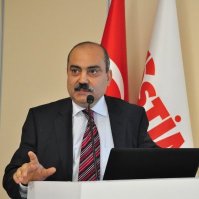
2021 is the European Year of Rail – Dr. İlhami Pektaş
The European Commission has declared the year 2021 as the “The European Year of Rail” and thus rail systems, a sustainable and safe transportation technology, has come to the fore this year.
The EU Commission aims to double freight transport, triple high speed rail transport and reduce greenhouse gas emissions by 90% by 2050 in Rail Transportation Systems.
There are four criteria in featuring of rail systems. These are comfort, time, cost and sustainability due to gradually increasing number of passengers and freight. Public transportation is the fastest, most comfortable, inexpensive and environmentally friendly way to get from one place to another. Rail transport within public transport has also reached an important level by developing from the past to the present due to its cheap, environmentally friendly, reliable and sustainable characteristics.
This year, the importance of the railway as a sustainable, smart and safe means of transportation and the aim for zeroing greenhouse gas emissions with the green agreement until 2050 will be explained to all European societies and operators. The Trans-European Transport Network (TEN-T) will be expanded and used throughout Europe, and passenger and freight transport will be increased. This will contribute to the EU’s green consensus by taking the first step towards using reliable, cheap, clean energy railways with minimized greenhouse gas emissions and environmental pollution, which unites the whole Europe.
With the declaration of the year 2021 as the railway year, the EU Commission started to announce all information publications and events by setting up a website. Here, the strategies will be emphasized for cooperation between enterprises and companies, providing better connections for railways with other modes of transportation by increasing freight and passenger transportation with economic, sustainable, emission-free and noise-free mobility. The EU Commission aims to double freight transport, triple passenger transport with high speed rail and reduce greenhouse gas emissions by 90% by 2050 with the ongoing work. The Commission will also present an action plan to increase passenger rail transportation by following a clean, digital, economic and innovative strategy to achieve these goals.
Year 2021 to Be a Milestone for Rail System in Turkey
4.136 kilometers of railway was inherited to our country from Ottoman Period from 1856 to 1923. During the Republic period, railway investments were accelerated and approximately 3,000 km of railway was built. Until 1950, a total of 3,764 kilometers of rail network was reached. During this period, passenger transport was 42% and freight transport was 68%. After 1950, the advance of rail networks was slowed down, and railways entered a period of discontinuation for over half a century. 2003 was the beginning for the revival of our railways in the railway and urban rail transportation systems, which were neglected from 1950 to 2003.
In this new period, 2023 targets were set, followed by major developments in steel rails. Allowance of Railways has increased, the abandoned projects have been revitalized; and during the last 18 years, giant projects helping Turkey to develop have been implemented and very large investments have been made. Since 2003, 169.2 billion TL has been invested in railways and investments continue to increase in line with our domestic and national targets with the decisions taken in the 11th Development Plan. Turkey met with the High-Speed Train in 2009 with the opening of the Ankara-Eskisehir line, and reached the position of being the 8th country in the world and the 6th country in Europe using high-speed technology most. Thus, the opportunity we missed after 1950 was regained thanks to the high-speed train investments. Baku-Tbilisi-Kars (BTK) Silk Railway Project was completed and freight transportation was started between Europe and Asia.
Currently there is 12.740 kilometers of railway network in Turkey in total. Today, 12 thousand km speed and high-speed train, 4,400 km new conventional train line, electrification and signalization works continue at a great pace in line with the targets of 2023. It has been aimed that in 2023, 25.000 km including high-speed train lines, 1000 km in urban rail systems will be completed; and in 2035, 32.000 km of railways will be completed and rail transport share will increase to 10 % in passenger transport and 15 % in freight transport.
In 2021, our railway networks are expanding day by day with both urban and intercity investments, and the rate of domestic contribution and the number of our national brands are increasing day by day. As of today, we have had 9 national brands in rail systems. National brands serve in Istanbul, Bursa, Kayseri, Samsun and Kocaeli.
This year, Bozankaya won the tender of Antalya Municipality’s 15 trams having the properties of 32 meter long, 100 % low floor and two way with the capacity of 300 passengers and the tender of Ministry of Transport and Infrastructure’s 7 metro sets including 28 metro cars for Gebze-Darıca, which is to be Turkey’s first domestic and national driverless metro cars.
Durmazlar produced and started to deliver 30 trams for Eminonu-Alibeykoy line.
TURASAS won the tender of the 32-vehicles GAZIRAY Suburban Line and Light Rail Transport Project made by Gaziantep Metropolitan Municipality.
This year, TURASAS will complete the manufacturing and tests of 160 km/h speed national electric high-speed train sets and national diesel electric locomotives in Sakarya. TURASAS also works for the mass production of HSL-700 Hybrid locomotives and E5000 type mainline national electric locomotives with 5MW power in Eskişehir. Modernization of TLM16V185 Type Heavy Diesel Engine with 2400 hp power used in existing locomotives and the commercialization of the production of the 8-cylinder Original Engine with minimum 1200 hp and the design and manufacturing of H Bogie with a speed of 120 km / h and TSI certification are about to be completed.
National brands will start serving in Ankara-Sivas, Antalya, Gaziantep, Gebze-Darıca lines near future.
Bozankaya and Durmazlar Export Trams and Trolleybuses to Romania and Poland.
The national signaling system developed by Aselsan started to be used in Gebze-Darica metro line. Thus, we see 2021 as a turning point for nationalization in rail systems.
When we compare our railways with European and Asian countries today, we can say that we have made a very important level.
Within this framework;
We need to ensure combined transport by increasing the junction connections of logistics centers, factories, industry, organized industrial zones with the ports of Mediterranean Sea, Black Sea and Aegean Sea. These connections will increase our freight transport share. At the same time, we will increase the passenger transport share by completing the Ankara-Istanbul, Ankara-Eskisehir, Ankara-Izmir, Ankara-Bursa, Ankara-Sivas, Ankara-Konya, Mersin-Adana-Gaziantep, Eskisehir-Konya high-speed train and speed train lines with in the frame work of 11th Development Plan targets.
During this period, increasing automation and digitalization started to bring autonomous driving as a part of our daily life, thus integrated transport services such as self-driving bus services to the station. A system similar to this is currently being implemented in Singapore, with a perfectly coordinated, intelligent traffic management system. All traffic lights, intersections and traffic routes are included in this system. With Real-Time Data, traffic flow is better controlled and traffic congestion and long waiting times are eliminated. Autonomous vehicles are in the test phase on the test roads. In our country, Bozankaya develops driverless metro cars, and Aselsan develops traction and control systems and national signaling systems for driverless lines. Karsan started mass production of the driverless electric bus. The company received orders from Romania and the USA. In this context, it is very important for our companies to follow new technologies and plan their road maps to be integrated with driverless systems.
Hydrogen-powered trains are becoming widespread in Europe. Germany transports passengers on hydrogen-powered trains in the state of Lower Saxony. Studies on hydrogen-fueled trains are also ongoing at the University of Birmingham in England. In this system, when the hydrogen in the tanks meets with oxygen, it creates electricity, and the clean energy generated is stored in batteries. Second generation hydrogen trains with very short fuel charge duration make the journey even more environmentally friendly. Thanks to these systems, railways will become more sustainable in the future.
In our country, we need to start working on hydro mobility, the future technology for rail systems ecosystem, as soon as possible. In addition, the predictive maintenance of trains started to be carried out with the help of algorithms and artificial intelligence. Thus, malfunctions are prevented before they occur with small investments and trains are always kept ready for service. Today, driverless rail systems save cost by decreasing energy consumption while increasing capacity utilization at the same rate, thus allowing twenty percent more passengers to be transported. All these elements mentioned will accelerate the transformation in transportation and the transition to public transportation.
Development of intermodal and multimodal applications, increasing the share of rail and maritime transport by benefiting from Turkey’s geographical advantage; connecting the industrial regions of Anatolia with ports, reducing logistics costs, easing commerce and increasing our country’s competitiveness with the establishment of fast, flexible, safe, reliable and integrated transport system are of great importance for our economy.
In addition, the Silk Railway transportation established between Europe and Asia, with all its connections in Anatolia, will become a transfer and logistics center of transit among European countries, Middle East, Asia and African countries thanks to its gates opening to our industrial regions in Anatolia including our ports of the Black Sea, Mediterranean and Aegean Sea.
An integrated railway transportation with a wide rail network and other transportation systems will also contribute to the prevention of climate change by increasing efficiency and reducing CO2 emission for our country. Besides, the Turkish Railway Industry, which provides a high amount of direct and indirect employment under the leadership of ARUS, will continue to contribute to the welfare of our country by reducing our country’s imports and increasing exports in this sector thanks to domestic and national brands.
Our rail system industry, which exports 750 million dollars to 25 countries including infrastructure in rail systems, will be more revitalized this year and our exports will exceed 1 billion dollars.
Railway year 2021 will be a very important opportunity and milestone for our industry. With the support of Ministry of Transport and Infrastructure, Ministry of Industry and Technology and Ministry of Commerce, with all members of our association, we will give all our efforts not only in Turkey but also abroad, and continue to increase the amount of export.