Strategic Cooperation Protocols, Rail Systems Panels and B2B Meetings Held at the Türkiye Rail Systems Business Forum 2026 Organised by ARUS – Dr. İlhami Pektaş
The Türkiye Rail Systems Business Forum 2026, organised by the Anatolian Rail Transportation Systems Cluster (ARUS), was held on 12–13 February 2026 at the TÜBİTAK Rail Transportation Technologies Institute (RUTE) within the TÜBİTAK Gebze Campus.
Bringing together public institutions, industry and academia on a single platform, the comprehensive event addressed the sector’s strategic agenda—from investment policies, R&D and incentive mechanisms to legislation, standards and the domestic and national production vision—becoming an important meeting point shaping the future of the rail systems ecosystem.
The Forum was held with the distinguished participation of Deputy Ministers of the Republic of Türkiye Ministry of Industry and Technology and Ministry of Transport and Infrastructure, Dr. Çetin Ali Dönmez and Osman Boyraz; Director General of Sectors and Public Investments at the Presidency of Strategy and Budget, Faruk Cirit; TÜBİTAK President Prof. Dr. Orhan Aydın; AYGM Director General Dr. Yalçın Eyigün; Director General of Development Agencies Ahmet Şimşek; TÜRASAŞ General Manager Selim Koçbay; TCDD Deputy General Manager Öner Özgür; TCDD Taşımacılık Deputy General Manager Erhan Gör; UHDGM President Selami Yazıcı; Ministry of Industry and Technology R&D Incentives Clustering Department Head Canan Ünlü Şahin; OSTİM President Orhan Aydın; Kardemir Chairman of the Board Muhammed Ali Oflaz; ASELSAN Deputy General Manager Alaattin Dökmen; Anadolu University Rector Prof. Dr. Yusuf Adıgüzel; Eskişehir Technical University Rector Prof. Dr. Adnan Özcan; Eskişehir Osmangazi University Rector Prof. Dr. Kamil Koçak; Sivas Science and Technology University Rector Prof. Dr. Mehmet Kul; and valuable members of the ARUS Board.
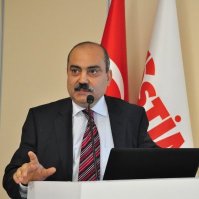
With the vision of domestic and national production, we are building a strong ecosystem in the rail systems field and continue our efforts with determination to develop technology and enhance global competitiveness together with our members.
Within the scope of the forum, significant collaborations were launched to develop and expand domestic rail technologies across critical areas ranging from signalling and automatic train inspection infrastructure to test centres and national locomotive software development projects.
In this context:
- A protocol was signed between TÜBİTAK and TCDD to expand the domestic signaling systems by ensuring ERTMS compliance.
- An agreement was signed to increase the nationwide deployment of Automatic Train Inspection Stations.
- A critical cooperation protocol was signed among AYGM, ASELSAN and TÜBİTAK RUTE to expand metro signalling systems in our cities.
- A URAYSİM Support Cooperation Protocol was signed between TÜBİTAK and TÜRASAŞ.
- A critical protocol was executed for the National CoCo Locomotive Software Development Project.
Brief information on these collaborations is provided below.
Protocol for Expanding ERTMS-Compliant Domestic Signalling Systems
Domestic signalling projects carried out under the cooperation of TCDD and TÜBİTAK RUTE were initiated in 2009. As a result of long-term and determined efforts, Türkiye’s first domestic signalling system was successfully commissioned in 2012. Through these efforts, Türkiye developed its first SIL4-certified domestic railway signalling system, marking a critical milestone for railway safety and technological independence. With the appointment of TCDD General Manager Veysi Kurt, localisation cooperation between TCDD and TÜBİTAK RUTE gained further momentum. Thanks to this synergy, the number of stations equipped with domestic signalling— which began to increase in 2023 — grew by over 100% in 2024. By the end of 2025, the figure exceeded 60 stations. Today, domestic signalling systems are actively operating on a total of 750 km of railway lines. In line with national targets, this length is planned to reach 2,000 km by the end of 2030.
Protocol for Expanding Automatic Train Inspection Stations Nationwide
Automatic Train Inspection Station (OTMI) systems are being developed through joint projects of TCDD and TÜBİTAK to ensure the sustainability and safety of railway infrastructure. These AI-supported systems are designed to intelligently monitor critical components—such as wheels, brakes, pantographs and axle boxes—of freight trains under normal operating speeds and real environmental conditions. The first OTMI station, commissioned in Kırıkkale Yahşihan on a commercial line, has begun measurements, paving the way for nationwide deployment through four additional planned installations. The system is also planned to be implemented at İzmit Köseköy station.
Protocol for Expanding Metro CBTC Signalling Systems
Through the cooperation of AYGM, TÜBİTAK RUTE and ASELSAN, another strategic step has been taken to strengthen Türkiye’s technological independence in rail systems. The domestically developed metro signalling system—produced under AYGM leadership in cooperation with ASELSAN and TÜBİTAK—represents a high value-added engineering achievement and is Türkiye’s first and only SIL4 domestic metro signalling system. The system also supports driverless operation and delivers world-class capabilities. With ongoing deployment on the Gayrettepe–Istanbul Airport line, the domestic metro signalling system has proven itself in the field with high safety standards, advanced control capability and safety-critical communication infrastructure. These investments not only meet today’s needs but also lay the foundation for the smart transportation infrastructure of the future and strengthen Türkiye’s national rail network.
National CoCo Locomotive Software Development Protocol
With this project, the critical train control and management systems of next-generation diesel and electric CoCo-type locomotives—soon to enter TÜRASAŞ production lines—will be developed entirely through domestic engineering capabilities. The new software and hardware architecture will also enable different locomotive types and models to communicate with each other, allowing multiple units in the fleet to operate as a single set and maximising operational flexibility and efficiency.
URAYSİM Support Cooperation Protocol between TÜBİTAK RUTE and TÜRASAŞ
The National Rail Systems Test and Research Center (URAYSİM), established in Eskişehir Alpu Campus to meet the testing needs of Türkiye’s rail ecosystem, is expected to conduct its first sector tests in May 2026 with the support of TÜRASAŞ. The static body test system currently located in TÜRASAŞ Sakarya will be transferred to URAYSİM, and tests will henceforth be conducted within URAYSİM in compliance with TSI requirements.
RAILWAY ECOSYSTEM PANEL SESSIONS
Following the opening and signing ceremonies, on the 1st and 2nd days, panel sessions were held on Investment, R&D and Incentive Strategies in Rail Systems; Legislation, Standardization and European Union Harmonization Policies in the Railway Sector; Sectoral Development and Expectations from the Perspective of Urban Rail System Operators; and the Domestic Production Ecosystem in Rail System Vehicles, the launch of the ARUS Clustering Support Program supported by the Ministry of Industry and Technology of the Republic of Türkiye was held, along with the introduction of Kardemir Iron and Steel Works, which realized Türkiye’s first rail and railway wheel production, and B2B cooperation meetings were organized among companies engaged in manufacturing, design and R&D in the field of rail systems, infrastructure contractors, companies providing railway freight transportation and logistics services, and rail system operators.
Panel on Investment, R&D and Incentive Strategies in Rail Systems
On the 1st day of the event, the Panel on Investment, R&D and Incentive Strategies in Rail Systems was held under the moderation of Mr. Faruk Cirit, Director General of Sectors and Public Investments at the Presidency of the Republic of Türkiye Strategy and Budget Office.
- Dr. Yalçın Eyigün, Director General of AYGM,
- Mr. Ahmet Şimşek, Director General of Development Agencies,
- Mr. Selami Yazıcı, President of UDHAM, and
- Dr. Tolgahan Kaya, Director of TÜBİTAK RUTE, representing the President of TÜBİTAK,
participated in the panel, during which participants were informed about the railway investments carried out and planned in rail systems, R&D activities, and the incentives provided by the Ministry.
Legislation, Standardisation and European Union Harmonization Policies in the Railway Sector
On the same day, the 2nd panel on Legislation, Standardization and European Union Harmonization Policies in the Railway Sector was held under the moderation of Prof. Dr. Oral ERDOĞAN, Chairman of the Board of Turkish Lloyd and Faculty Member at Piri Reis University.
The following panelists participated:
- Mr. Mehmet Halil MADAZLI, Deputy Director General of Product Safety and Inspection, Ministry of Trade,
- Dr. Kürşat ÖZDEMİR, Deputy Secretary General of the Turkish Accreditation Agency (TÜRKAK), Ministry of Foreign Affairs,
- Mr. Mustafa Kırmızıgül, Head of the Railway Certification Department, Directorate General of Transport Services Regulation (UHDGM), Ministry of Transport and Infrastructure,
- Mr. Öncü Alper, Group Head of the Transportation Sector, Turkish Standards Institution (TSE),
- Mr. Ömer TANGÜL, representing the Directorate General of European Union and Foreign Relations, Ministry of Transport and Infrastructure.
During the panel, participants were provided with information on legislation, standardization, and EU harmonization policies in the railway sector. Discussions included the steps taken and consultations with EU authorities since 2013 to enable NoBo assignments in Türkiye, and the actions taken to finalize this process.
It was emphasized that transportation is the lifeblood of a country’s economy, and the stronger and more uninterrupted these lifelines operate, the healthier the economy grows. The railway sector is one of the most strategic components of this system. However, a strong transportation infrastructure is not only possible through physical investments but also through a robust legal framework, an effective standardization system, and a regulatory framework aligned with international norms. Sustainable development and international competitiveness are fundamentally based on a predictable, law-abiding, and trustworthy legal system. Technical competence, safety, and interoperability gain meaning only on a solid legal foundation. At this point, it was highlighted that conformity assessment, certification, and technical inspection capacity are as important as legislation itself.
Sectoral Development and Expectations from the Perspective of Urban Rail System Operators
On the 2nd day of the Türkiye Rail Systems Business Forum, the 3rd panel on Sectoral Development and Expectations from the Perspective of Urban Rail System Operators was moderated by Dr. Özgür SOY, Chairman of TÜRSİD and Metro İstanbul.
The following panelists participated, representing their institutions:
- Mr. Melih DİPOVA, General Manager of Antalya Ulaşım A.Ş.,
- Mr. Mehmet CANBULUT, Chairman of the Board, Kayseri Ulaşım A.Ş.,
- Mr. Murat ZORAL, Branch Manager, Ankaray Operations,
- Mr. Sinan KARAKUZU, General Manager, İzmir Metro A.Ş.
The panel discussed localization projects in urban rail systems, increasing capacity needs, long-term demand projections, challenges in urban transportation, and expectations regarding their solutions. It was emphasized that while urban rail systems in Türkiye transport millions of passengers daily, the need for vehicles, equipment, and technology grows rapidly in line with expanding line lengths and capacity investments. During the session, structural challenges such as exchange rate pressure, fare policies, dual structures arising from public-private mixed status, and rising operating costs were highlighted as the main difficulties of the sector. Efforts to develop domestic production were shared. Attention was drawn to the loss of experienced personnel after retirement (EYT), and the critical role of digitalization and data-driven management in strengthening institutional memory was emphasized.
Domestic Production Ecosystem in Rail System Vehicles
The 4th panel on Domestic Production Ecosystem in Rail System Vehicles was moderated by Dr. Feyzullah GÜNDOĞDU, President of UITP Eurasia.
The following panelists participated, representing their institutions:
- Mr. Emrah DAL, CTO – Bozankaya Raylı Sistemler A.Ş.,
- Dr. Tolgahan KAYA, Institute Director – TÜBİTAK RUTE,
- Mr. Ahmet Muaz ATEŞ, Sector Program Director – UGES, Aselsan A.Ş.,
- Mr. Yunus UĞURLU, Head of Locomotive Department – TÜRASAŞ,
- Mr. Fatih GÜLTEKİN, Deputy General Manager – Metro İstanbul A.Ş.
During the panel, the latest achievements in domestic and national production were presented, including domestically produced rail transportation systems and national signaling systems. The panel introduced the E5000 locomotive produced by TÜRASAŞ, electric high-speed trains with speeds of 160 km/h and 225 km/h, Gaziray suburban train sets, national CoCo locomotives and freight wagons, firefighting and rescue wagons, military transport wagons, panoramic wagon designs, and wagon maintenance and overhauls, as well as Bozankaya’s next-generation battery-powered trams exported to Romania, Italy, Poland, and Slovakia, metro vehicles exported to Thailand, driverless national metro vehicles for the Gebze-Darıca line, TRAM34 produced by Metro İstanbul, and national signaling systems and traction motor studies developed by ASELSAN and TÜBİTAK RUTE, with information on planned investments and initiatives aimed at increasing domestic production in the rail sector.
Launch of the ARUS Clustering Support Program by the Ministry of Industry and Technology of the Republic of Türkiye
In this panel, Ms. Canan Ünlü Şahin, Head of the Clustering Department at the Directorate General of R&D Incentives, Ministry of Industry and Technology of the Republic of Türkiye, and Mr. Emrah Dal, Vice President of the ARUS Board of Directors, participated. The Anatolian Rail Transport Systems Cluster will be supported for five years at a rate of 70% through the call-based clustering support program implemented by the Ministry of Industry and Technology, aiming to generate economic value through public, university, and industry collaboration in line with development policy goals. The supported areas include activities carried out within the framework of cluster coordination, such as workshops, meetings, training, personnel and institutional capacity development, innovation activities developed by the cluster, shared infrastructure, shared laboratories, and other efficiency-enhancing activities affecting the supply chain.
B2B COOPERATION MEETINGS
One-on-one B2B meetings were held with participation from public and private rail vehicle/wagon manufacturers, public and private railway transport operators (RTOs), logistics companies, infrastructure contractors, and municipal rail system operators, bringing the ecosystem together and supporting networking, collaboration, sales, and marketing activities.
This strategic platform, which brought together all stakeholders of the rail systems ecosystem, also addressed critical topics such as railway passenger and freight transport capacity, fleet management modernization, domestic production, and integration with international corridors.
We would like to thank all representatives of the Turkish railway industry who participated in the Türkiye Rail Systems Business Forum 2026, as well as all relevant institutions and organizations, for their support in strengthening national collaboration.