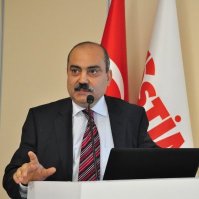
Anatolian Rail Transportation Systems Cluster (ARUS) Success Story-Dr.İlhami Pektaş
Guided by the conviction that “rail systems are our national cause,” the Anatolian Rail Transportation Systems Cluster (ARUS) was established in 2012 at OSTİM as Türkiye’s leading cluster covering the entire Anatolian region. Bringing together industrialists engaged in the production of rail transport systems, as well as supporting institutions and organisations, ARUS operates under the vision of “Cooperation, Collaboration and National Brands.”
With the primary objective of producing domestic and national rail transport systems- from design to the final product- and transforming them into global brands, ARUS unites approximately 200 members from 27 provinces across Anatolia. It brings together all the leading organisations of the Turkish rail systems sector to foster cooperation and collaboration in the production of national brands.
Establishment Process
The founding of ARUS coincides with 29 December 2011, the date on which the tender specifications for the procurement and commissioning of 324 Ankara Metro vehicles were published. Representatives of our rail transport systems sector convened at OSTİM and reached a consensus that all rail transport systems, starting with the Ankara Metro, should be produced domestically and nationally in Türkiye, that imports should be prevented, and that the domestic content share should be increased.
The meeting emphasised that utilising domestic potential in rail transport systems is of critical importance for Turkish industry; that decision-makers, bureaucrats and industrialists share a common responsibility for closing the current account deficit and reducing external dependence; and that sector manufacturers are already prepared for domestic production in terms of engineering capability, capacity and quality.
Fourteen different brands imported from different countries
Until the establishment of ARUS, high-speed trains, metro, light rail transit (LRT) and tram vehicles had been imported from companies such as Siemens, Alstom, Bombardier, Hyundai Rotem, ABB, CAF, Ansaldo Breda, Škoda, CSR, CNR, Mitsubishi and Hitachi. Approximately 2,600 rail system vehicles, representing 14 different brands from 10 different countries and with a total value of €9 billion, had been procured—none of which included a domestic content requirement. With additional costs, this figure reached to €15 billion. The resulting foreign-exchange losses, spare-part and inventory costs, labour and other extra expenses left the country entirely dependent on foreign suppliers. No national policy had been defined. Despite the existence of numerous capable Turkish companies, the question of why these vehicles were not produced domestically instead of being purchased from abroad had never been asked.
Apart from mainline railways, rail system services are provided in 12 provinces across Türkiye, and rail system projects have been ongoing since 1989. By 2053, we will need 7,000 metro, LRT and tram vehicles, 1,200 high-speed trains, conventional trains, DMU, EMU and commuter train sets, and more than 30,000 freight wagons. Sector representatives who rejected the continued import of rail vehicles stepped forward under ARUS and committed themselves to producing these vehicles domestically and nationally, and to creating national brands.
Why Don’t We Produce It Ourselves?
OSTİM President Orhan Aydın, Ankara Chamber of Industry (ASO) and Organised Industrial Zones Supreme Organisation (OSBÜK) President Nurettin Özdebir, OSTİM Foundation Board Member and ARUS founder the late Prof. Dr. Sedat Çelikdoğan, RAYDER executives Ahmet Gök and Taha Aydın, together with rail transport systems sector manufacturers-primarily Bozankaya, Durmazlar, Aselsan, Medel, Sazcılar, Railtur, Savronik and Safkar, as well as representatives of foundations and civil society organisations, gathered at OSTİM. With the rallying cry “Rail systems are our national cause – Why don’t we produce these vehicles ourselves? Enough is enough, we are ready for domestic and national production,” they launched a joint struggle. Their determined efforts ultimately bore fruit: on 14 February 2012 the Ministry of Transport, Maritime Affairs and Communications, as it was named then, decided that the tender specifications for the 324 metro vehicles to be used on the Ankara Metro would require at least 51 % domestic content.
As a result of this meeting and consultations held, the Anatolian Rail Transportation Systems Cluster (ARUS) was established to represent the sector, and Dr. İlhami Pektaş assumed the role of ARUS Coordinator. OSTİM President Orhan Aydın recounts the founding process: “In the process that began with the Ankara Metro tender, we brought together ASO, OSBÜK, NGOs and everyone in Türkiye who produced anything related to rail systems at OSTİM. I particularly wish to commemorate the efforts of our late Prof. Dr. Sedat Çelikdoğan. When we gathered all the sector representatives and industrialists of Türkiye, we realised that the country’s potential was far ahead of what we thought.
Together we sought answers to the question: ‘Why is Türkiye not utilising this potential and meeting its needs with domestic resources?’ From that point we formed a cluster. Through this cluster it became clear that our country could produce its own rail system vehicles—light metro vehicles, metro vehicles, locomotives and high-speed trains. Once we closely examined the projects our companies had already realised, our collective self-confidence grew. ARUS was founded at OSTİM, but because our members cover the whole of Anatolia we decided on the name Anatolian Rail Transportation Systems Cluster. I thank all those who founded and contributed to ARUS—first and foremost our late Prof. Dr. Sedat Çelikdoğan, the management of ASO and OSBÜK, the OSTİM community, the representatives of the rail systems sector, our industrialists and all ARUS members.”

Rail Systems Are Our National Cause
Between 1950 and 2003, railways and urban rail transport systems were largely neglected. In a period when hopes appeared to have been exhausted, 2003 marked a milestone for the railways. From that year onwards, major projects were implemented and substantial investments began to be made in the railways. With the establishment of ARUS, which regards rail systems as a national cause, the importance given to domestic and national production in the rail systems sector reached its highest level.
The national production journey began in 1961 with the domestic manufacture of the Karakurt steam locomotive at the TÜRASAŞ facilities in Eskişehir and the Bozkurt steam locomotive in Sivas. It continued with the licensed production of the DE 24000 series diesel locomotive (1970) in Eskişehir and Sakarya, the E 14000 electric suburban train set (1976), and the E 43000 series electric mainline locomotive (1988). In 1994 the first domestic railbus was produced in Sakarya and the first domestic DH 7000 type shunting locomotive in Eskişehir were produced in Eskişehir. In 1999, İstanbul Ulaşım A.Ş. produced the RTE2000 rail vehicle, designed by Turkish engineers and recognised as Türkiye’s first domestically manufactured tram. Serial production was targeted for the RTE 2009 tram that entered service on the Edirnekapı–Topkapı line in 2009. The renewal of an accident-damaged metro vehicle in Ankara by producing all its parts by OSTİM industrialists, Bozankaya’s position as a producer of rail transport system components in Germany, the United States and Türkiye, and Durmazlar’s production of the İpekböceği tram after completing its design and prototype Bursa Metropolitan Municipality recieving a mass production order for 18 series vehicles, were among the first sparks of Turkish industry’s drive for domestic and national production. ARUS gathered all this domestic production potential under a single roof and began working towards the goal of manufacturing the rail system vehicles required by our country using domestic and national resources.

51 % Local Content Requirement Introduced for Metro Vehicle Procurement
2012 became a turning point and a breakthrough moment for domestic and national production in Türkiye. From that date onwards, the era of a minimum 51 % local content requirement in all tenders held in our country began, and national brands were born. This decision meant that all metro, LRT, tram, high-speed train, locomotive and freight wagons needed by Türkiye would henceforth be met by the domestic railway industry. ARUS intensified its efforts to prevent the costly import of rail transport vehicles and to produce national brands.
Thereafter the perspective of foreign companies towards Türkiye also changed—from “How can we sell products to Türkiye?” to “How can we cooperate in Türkiye, and how can we develop projects and manufacture together with local companies in the Turkish market?” Almost all foreign firms began seeking local partners in Türkiye to do business together.
As railway industrialists we congratulate the Ministry, the bureaucrats and everyone who contributed to this decision, which has been of vital importance for increasing domestic production and developing our sector, and we thank them our gratitude for this courageous step.

Determination for Domestic and National Production in Rail Systems
On 11 December 2012 ARUS brought together Ministry of Transport officials, Chinese executives, sector representatives, chambers of industry and commerce, public institutions, NGOs and municipal operators at the İstanbul Chamber of Commerce to discuss the 51 % local content requirement with CSR for rail systems.

ARUS emphasised that it would monitor the decision taken jointly with senior Ministry officials and sector representatives, with the aim of increasing domestic production and ensuring that national brands keep national resources within the country. At the meeting ARUS members held discussions with Chinese officials on the distribution of the 51 % domestic content requirement for the Ankara Metro vehicles and on which products it should be applied to.
High-Speed Trains to Enter Service with 53 % Local Content
Within the scope of Türkiye’s domestic and national railway initiative, in which ARUS also participates, the launch of the “National Train” project—Türkiye’s first domestically manufactured high-speed train—was held on 17 December 2013 at TCDD Station by the then Minister of Transport, Maritime Affairs and Communications, Binali Yıldırım.

In 2014 TCDD completed the industrial design studies for the National High-Speed Train, and a high-speed train workshop was organised in Eskişehir with ARUS members, universities and R&D institutions wishing to participate in production.

In 2014 the ARUS Board of Directors visited Lütfi Elvan, who had been appointed Minister of Transport, Maritime Affairs and Communications. During the visit Mr Elvan announced that a “minimum 53 % domestic content requirement” would be included in the tender for 80 National High-Speed Trains. Following completion of the design and detailed engineering studies for the electric train sets, series production was planned. Türkiye would thus obtain National Electric High-Speed Train sets with a 53 % domestic content requirement, Turkish industrialists would benefit, and approximately 50,000 people would be provided.
Prime Ministry Circular on 51 % Local Content in Rail Systems Issued
Through the efforts of ARUS, Prime Ministry Circular No. 2017/22, published in 2017, brought into force a 51 % domestic content requirement for rail system vehicles. The circular stipulates that all powered and trailing vehicles to be used on urban and intercity railway networks in Türkiye must contain at least 51 % domestic content. Metro, light rail transit (LRT), tram, suburban trains, high-speed trains and all similar rail system vehicles fall within the scope of the circular. In all public tenders and procurement processes regulated by this circular, vehicles are required to meet the minimum 51 % local content and domestic product requirement.
With this circular, it is aimed to reduce external dependence, support the domestic industry and the rail systems sector, facilitate transfer technology, and increase the local share of products and services manufactured in Türkiye within public investments.
Localisation Activities
In order to increase domestic and national production, ARUS supports localisation efforts by organising Supplier Development Workshops bringing together its member companies with TCDD, TÜRASAŞ, TCDD Taşımacılık, TCDD Teknik, Bozankaya, Durmazlar, Aselsan, wagon manufacturers and companies wishing to manufacture in our country (Siemens, Alstom, Hyundai Eurotem). It also supports localisation through the Rail Systems Industry Technical Committee (RAY-TEK) Working Group on industrial policies, Test, Certification and Conformity Workshops, Offset/Industrial Cooperation Programme (SİP) Workshops, and Localisation Cooperation Workshops with TÜRSİD – Rail System Operators (metropolitan municipalities of Ankara, İstanbul, Bursa, Kayseri, İzmir, Eskişehir, Samsun, Adana,Antalya,Konya,Gaziantep and Kocaeli).


In accordance with the principles of “collaboration, unity of strength and national brands” and in the spirit of the Ahism tradition, ARUS works to enable all member companies and organisations to develop national products, export those products and thereby contribute to the national economy and create employment.


To date, ARUS members have to date launched over 20 national brands that are successfully in service both in Türkiye and abroad. In addition, ARUS carries out intensive work on producing rail systems components in our country through domestic and national production means, such as critical parts and strategic products that cannot be sourced from abroad.

Within the framework of the RTE rail system project, recorded as Türkiye’s first domestic light rail vehicle, the first prototype tram was successfully manufactured by İstanbul Ulaşım in 1999. Following the prototype, 18 İstanbul-brand tram vehicles were mass-produced using a similar design approach and these vehicle were put into service on the T4 (Topkapı–Mescid-i Selam) line in İstanbul. While celebrating its 34th anniversary in 2022, Metro İstanbul continued this pioneering tradition by introducing a new domestic tram project, Tram34.
Durmazlar has developed the İpekböceği and Panorama trams and the Green City LRT vehicle with domestic resources, while Bozankaya developed the Talas and new-generation trams as well as a driverless metro vehicle. İstanbul Ulaşım has developed the İstanbul LRT light metro vehicle, and Metro İstanbul has developed the Tram34 tram. The Panorama tram, among Durmaray’s new-generation rail system solutions, entered service first in Samsun in 2016, followed by Kocaeli in 2017 and in İstanbul in 2019.
The İpekböceği tram is the first private-sector national tram project developed by Durmaray, with R&D work beginning in 2009. It entered service in 2013 by being integrated into urban transit in Bursa. On the İpekböceği tram, Türkiye’s first domestic and national tram gearbox and traction motor were developed and utilized in cooperation with Aselsan, Yılmaz Redüktör and ELK Motor. TÜBİTAK-RUTE, ELSAN Elektrik A.Ş., TÜRASAŞ and ASELSAN have completed traction-motor tests for tram and metro vehicles and reached the stage of mass production.
Following the Kayseri Talas tram manufactured by Bozankaya at its production facilities in Sincan, Ankara in 2016, the new-generation trams developed in 2018 have a length of 30 meters, a width of 2,400 mm and 100% low-floor design. The vehicles can reach a maximum speed of 70 km/h and offer an effective transit solution on busy urban lines with a capacity of approximately 200 passengers.

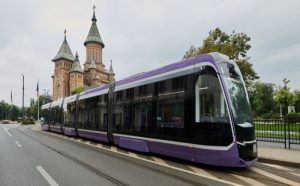
With the development of battery-powered tram technology in 2020, Bozankaya was awarded the title of “Europe’s Most Innovative Company” by the European Railway Clusters Initiative (ERCI). Also in 2020, the Domestic and National Driverless Metro Vehicle designed by Bozankaya became Türkiye’s first driverless metro vehicle. The project is an exemplary technology investment combining advanced automation in rail systems with domestic engineering capability. Designed for use on the Gebze–Darıca line, the metro vehicles have an operating speed of 80 km/h and a capacity of 1,476 passengers.

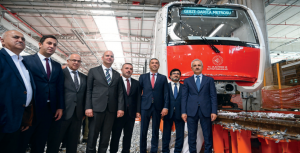
A four-car train set has a total length of 88 m. Production of 28 driverless metro vehicles has been completed and delivered to the Ministry of Transport and Infrastructure. A domestic content rate of approximately 70 % was achieved, with all design, engineering and project management processes entirely supplied from domestic sources.

Aselsan, in cooperation with Sönmez Trafo, has produced traction transformers and developed traction motors. Aselsan manufactures critical systems such as signalling and control systems, electric and rail vehicle control and management systems, electric vehicle traction systems, traction motor and control driver systems, rail vehicle traction systems, CBTC metro signalling systems, traffic management centres, passenger information systems, communication subsystems, interlocking subsystems and zone control subsystems. Aselsan has recently completed national signalling works on the Kağıthane–İstanbul Airport Metro Line and the Gebze–Darıca metro line.
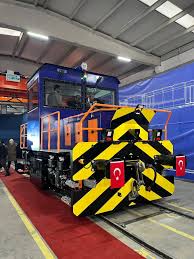
TÜBİTAK Rail Transport Technologies Institute (RUTE) conducts studies in the fields of electric drive systems, vehicle control systems, vehicle design and analysis, engine and transmission systems, robotic intelligent systems and energy storage systems. TÜBİTAK RUTE and TÜRASAŞ have developed the E1000 electric shunting locomotive—1 MW, featuring a modern drive system, 85 % domestic content—capable of meeting TCDD’s shunting and short-distance freight transport needs.
Thanks to the traction systems developed under the “Development of Traction Systems for Diesel-Electric Locomotives” project, the capability to produce the most critical systems domestically was achieved. Through this project, traction systems were developed for a total of 14 locomotives of four different types for TÜRASAŞ; following the prototypes, the traction systems continue to be manufactured at TÜRASAŞ facilities under technology transfer
Systems previously procured from abroad were designed and commissioned using national resources and providing their success by covering over 100,000 km in service. Drawing on the experience gained through TÜRASAŞ–TÜBİTAK RUTE cooperation, the “E5000 Electric Mainline Locomotive Development” project led to the development of a new-generation electric mainline locomotive of 5 MW, compliant with the European Union Technical Specification for Interoperability (TSI), suitable for freight and passenger transport, with a maximum speed of 140 km/h. Serial production of 95 locomotives has commenced. With the E5000 project, our country’s foreign dependency in meeting its electric mainline locomotive needs has come to an end entirely.
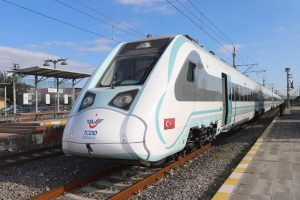
The electric train set project launched by TÜRASAŞ in 2013 under the high-speed train project began testing in 2020 and entered service on the Adapazarı–Gebze line in 2023. The National Electric Train Sets operating under the Sakarya name have an operating speed of 160 km/h, a capacity of 324 passengers and a domestic content rate of 70 %.

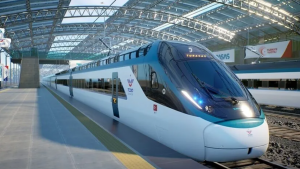
The National Electric High-Speed Train project, capable of reaching 225 km/h, comprises eight aluminium-bodied cars with a capacity of 584 passengers and is currently in the testing phase. It is targeted to complete testing and proceed to serial production in 2026.
Further more with national resources, TÜRASAŞ has manufactured the DE 10000 diesel-electric shunting locomotive and aluminium-bodied electric suburban train sets with a maximum speed of 90 km/h for Gaziray as original vehicles. The DE 10000 shunting locomotive has been exported to Tanzania, while the suburban trains have entered service in Gaziantep.

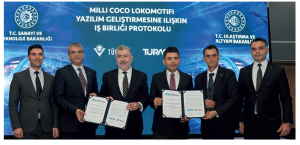
Another notable initiative in freight transport is the HSL 700 national hybrid shunting locomotive project. Developed in cooperation between TCDD Taşımacılık, TÜRASAŞ and ASELSAN, the hybrid locomotive integrates diesel engine and battery power units and achieves fuel savings of up to 40 %. Thanks to this technology, Türkiye has joined the limited number of countries capable of developing and commercialising hybrid locomotives. Also, development studies continue for the “Domestic and National CoCo Platform Mainline Locomotive”—an electric, six-axle locomotive boasting 7.2 MW / 3,750 hp unit—in cooperation between TÜRASAŞ and TÜBİTAK-RUTE.
Under the “Modernisation of the TLM16V185 Heavy Diesel Engine and Development of an Original Engine” project for TCDD Taşımacılık, TÜBİTAK-RUTE and TÜRASAŞ completed the zero-based development of an original engine for shunting locomotives and the modernisation of existing engines to reduce fuel consumption by 12 %. The 12-cylinder diesel locomotive engine developed under the Original Engine project reaches 2,700 hp and has 100 % domestic design and 90 % domestic manufacturing content. Consisting of 3,600 parts, this engine holds the distinction of being the first high-power domestic locomotive engine whose intellectual property and licensing rights belong entirely to Türkiye.
Under the “National Signalling” project, TÜBİTAK-RUTE developed an ETCS Level 1 signalling system compliant with European standards. The system, which has SIL4 safety integrity level, was first successfully applied on the Torbalı–Ödemiş line in İzmir. It has subsequently been gradually rolled out on main lines such as Ankara–Kayseri and Afyon–Denizli, and as of January 2025 has been commissioned at a total of 36 stations across Türkiye. The National Train Control and Management System (MTYKS) developed by TÜBİTAK RUTE provides real-time monitoring and centralised command of all subsystems within the train, functioning as a “train brain system” that minimises driver-related errors.
The GSM-R-based TCDD Communication System developed by TÜBİTAK provides secure and uninterrupted train-to-train and train-to-centre communication. ASELSAN plays an important role in R&D activities aimed at reducing external dependence in railway signalling systems and developing domestic technologies. The COBALT Metro Signalling System developed by ASELSAN is designed based on Communication-Based Train Control (CBTC) technology and is configured to determine the precise location of the train safely through bidirectional continuous communication without the need for track circuits.
The fundamental objective of the ARUS domestic railway production mobilisation is to bring the domestic and national railway industry into a strong, sustainable and competitive structure. To date, local content ratios of 95 % in electrification, 35 % in signalling, 95 % in superstructure, 100 % in infrastructure and 70 % in rail system vehicles have been achieved.


Cooperation, Collaboration and Our National Brands
Through the intensive efforts it has exerted since the day it was founded, ARUS has not only secured a minimum 51 % domestic content contribution for imported rail system vehicles but has also succeeded in raising the local content ratio of the national-brand trams, light metro vehicles (LRT), metro, suburban, electric train, electric high-speed train, locomotive, wagon, traction system, control system and signalling systems it has produced to the 70 % level. As a result of these studies, the domestic content target was set at 80 % in the 12th Development Plan.
In this context ARUS has provided 51 % domestic contribution to 1,736 of the total 3,495 imported rail system vehicles while simultaneously pioneering more than 20 national brands in the production of trams, LRT, metro, electric (EMU) and diesel locomotives (DMU), high-speed trains and wagons, enabling 560 national rail system vehicles to enter service across our cities.
As a result of the spirit of unity and teamwork displayed by ARUS members, the following products, among others, have been realised: 18 İpekböceği and 56 Panorama trams (Durmazlar), 60 Green City LRT vehicles (Durmazlar), 18 İstanbul LRT vehicles (Metro İstanbul), 31 Kayseri Talas trams (Bozankaya), 62 new-generation trams (Bozankaya), 20 LRT vehicles (Bozankaya), 28 driverless metro vehicles (Bozankaya), 95 E5000 electric mainline locomotives (TÜRASAŞ), 32 Gaziray electric suburban trains (TÜRASAŞ), 3 sets (15 cars) of 160 km/h and 1 prototype set (8 cars) of 225 km/h electric train sets (TÜRASAŞ), 1 HSL 700 hybrid shunting locomotive (TÜRASAŞ and Aselsan), 1 E1000 and 1 DE10000 diesel-electric shunting locomotive (TÜRASAŞ), 34 Tram34 trams (Metro İstanbul), hundreds of new-generation freight wagons, military tank-transport wagons, fire-fighting wagons, the TLM6V185 diesel engine, an 8-cylinder 1,200 hp diesel engine, a 12-cylinder 2,700 hp diesel locomotive engine, traction motors (Aselsan, TÜBİTAK-RUTE and Emsan Elektrik), and national signalling systems (Aselsan, TÜBİTAK-RUTE and Yapı Merkezi İDİS). The 560 domestically and nationally manufactured rail system vehicles are currently operating successfully in Bursa, Kayseri, İstanbul, Samsun, Kocaeli, Antalya, İzmir and Gaziantep, as well as on the Gebze–Darıca and Adapazarı–Gebze lines.
Contribution to State Policies
Within the ecosystem ARUS cooperates with the Ministry of Transport and Infrastructure, the Ministry of Industry and Technology, the Ministry of Trade, the Ministry of Environment and Urbanisation, the Presidency of Strategy and Budget, the General Directorate of Infrastructure Investments (AYGM), TCDD, TCDD Taşımacılık, TÜRASAŞ, municipalities, the Central Anatolian Exporters’ Association, the Turkish Exporters Assembly (TİM), universities, technoparks, TÜBİTAK, the Turkish Standards Institution (TSE), development agencies, KOSGEB, İller Bankası, the State Supply Office (DMO), the Association of All Rail System Operators (TÜRSİD), rail system operators and many public and private institutions, organisations and main-industry companies.
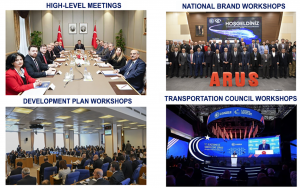

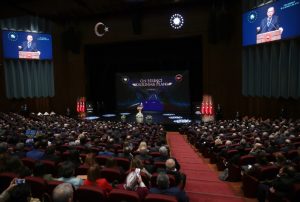
In this framework ARUS played an active role in the 2015 Domestic Goods Communiqué, the 2015 Industrial Cooperation Programme (SİP), the 2017 Prime Ministry Circular on 51 % Local Content in Rail Systems, the 2018 revised Industrial Cooperation Programme (SİP), the establishment of the Industrial Executive Committee (SAİK) in 2020, and workshops on increasing the local content requirement and producing national brands. As a result of all these efforts, increasing domestic production and producing national brands has become a state policy.
The Industrial Cooperation Programme (SİP) is a programme established to ensure innovation, localisation and technology transfer in public procurement, with the aims of increasing domestic production and reducing the current account deficit. In this context, studies have been carried out on which components of National High-Speed Train, metro and tram vehicles can be produced by which Turkish companies under SİP and on the local content ratios in the percentage tables of rail system vehicles.
ARUS has also participated in the 11th and 12th Transport Councils and the workshops of the 10th, 11th and 12th Development Plans, playing an important role in increasing domestic and national production. As a member of the Ministry of Industry and Technology’s Rail Systems Industry Technical Committee (RAYTEK) working group, ARUS participates in all meetings and contributes to shaping rail systems industrial policies, the increase of domestic content rates, the resolving sector problems, and establishing the regulatory framework.
As a sector representative, ARUS participates in the workshops of the Ministry of Transport and Infrastructure’s General Directorate of Railway Regulation (UHDGM) and contributes to the formation of legislation, standardisation and European Union harmonisation policies in the railway sector. It also serves on the working group of the Presidency’s Science, Technology and Innovation Policies Board, contributing with its opinions and recommendations to the reports prepared in the field of “Next-Generation Beyond-Rail Systems” in line with Türkiye’s 2053 vision, as well as to the drafted decisions, legislation act, communiqués, directives, circulars and regulations.
Ongoing and Completed National and International Projects
Specifically in the rail systems sector, ARUS has completed three International Competitiveness Development (UR-GE) projects supported by the Ministry of Trade and three EU COSME projects, and is currently implementing one Ministry of Trade UR-GE project and one Ministry of Industry Cluster Support Project.
Domestic projects – Ministry of Trade UR-GE
- 13.UR-GE.044 International Competitiveness Development Project (2013–2016)
- 17.UR-GE.046 International Competitiveness Development Project (2017–2021)
- 22.UR-GE.006 International Competitiveness Development Project (2022–2025)
- 25.UR-GE.076 International Competitiveness Development Project (2025–2028)
Within the scope of these projects ARUS has completed three UR-GE projects with up to 75 % support from the Ministry of Trade aimed at increasing the export capacity and international competitiveness of its members, and has started its fourth. Prior to launching each project a needs analysis is prepared and, in line with that analysis, international marketing and buyer missions covering the members’ sectoral fields are organised. Under the UR-GE projects carried out to date, B2B business meetings have been held both domestically and abroad with leading rail clusters including ACRI (Czech Republic), JORSA (Japan), Rail-S (Germany), VDB (Germany), Ditecfer (Italy), Mafex (Spain), Rail Group (Spain), Green Transport Cluster (Bulgaria), Swissrail (Switzerland), ACStyria (Austria), RCSEE (Balkan countries) and i-Trans (France), both abroad and in Türkiye. Visits have also been made to Belgium, the United Kingdom, Poland, Iran, Morocco, South Africa and Uzbekistan to develop cooperation and export potential of our members. As a result of these project activities, members’ total exports have increased by 120 % and new cooperation opportunities have been secured through participation in joint projects.
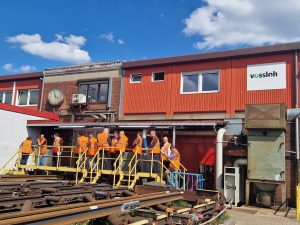
Ministry of Industry and Technology Cluster Support Project
Under the Ministry of Industry and Technology Cluster Support Project, ARUS has been awarded a five-year project with a budget of TRY 80 million and a 70 % support rate. The project officially commenced on 15 October 2025.
The Ministry’s Cluster Support Project aims to accelerate the transformation of clusters that operate mainly in the manufacturing industry, possess competitiveness and sustainability potential, and are of national importance, thereby accelerating the transformation of ARUS members into an industrial structure that secures a larger share of global exports, produces predominantly high-technology products, possesses a qualified workforce, and remains sensitive to the environment and society. Within the approved five-year work plan, activities have been planned to organise high-impact events, workshops and vocational training in order to develop the competitiveness, productivity, sustainability and qualified workforce of the ARUS cluster and its members, and to contribute to certification and quality assurance efforts to boost high-quality production and export capacity.
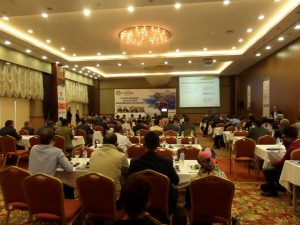
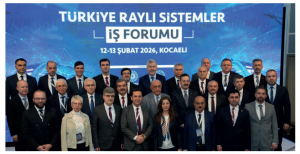
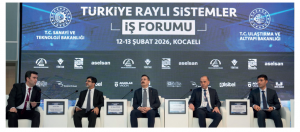
In this context the first Türkiye Rail Systems Business Forum 2026 was held on 12–23 February 2026 at the TÜBİTAK Gebze campus, bringing public, industry and academia together on the same platform and addressing the strategic topics of the sector—from investment policies to R&D and incentive mechanisms, from legislation and standards to the domestic and national production vision—thereby providing important guidance for the future of the rail systems ecosystem.
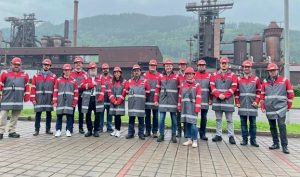
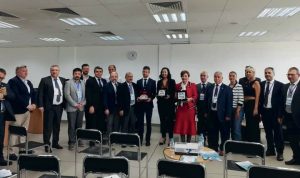
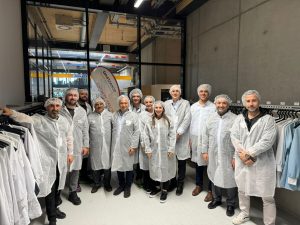
Furthermore, within the work plan, a thematic meeting and site visit on Railway Wheel, Axle and Wheel-Set Production and Development Studies was held at KARDEMİR A.Ş., followed by cooperation meetings between Spanish Railway Industry cluster (MAFEX) companies and ARUS members aimed at increasing exports. All activities are carried out in accordance with the programme approved by the Ministry of Industry.
International projects
Within the framework of ARUS’s activities in the European Railway Clusters Initiative (ERCI), joint projects are carried out with ERCI member clusters. The following projects have been completed:
- EXcellence EXchange and Teaming-up between RAilway clusters and ecosystems (EXXTRA), 2020–2022: http://exxtraproject.eu/
- STrategic Alliances boosting Railway SMEs (STARS), 2021–2023: https://starseurope.eu/
- Learnings for European Autonomy to Deliver Europe’s Rail in 2030 (LEADER 2030), 2022–2026: https://www.eurailclusters.com/erci_project/leader-2030/
ARUS Becomes a Member of the European Railway Clusters Initiative (ERCI)
In 2018, within the scope of its international activities, ARUS became a member of the European Railway Clusters Initiative (ERCI), which currently comprises 17 European countries and 18 European rail system clusters. Since that date ARUS has participated in all joint projects, fairs, events and cooperation activities of the initiative.
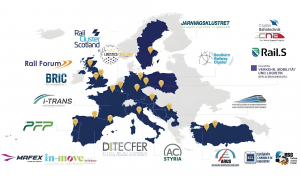
ARUS cooperates with the 17 European countries (Germany, Italy, France, the United Kingdom, Spain, Poland, Türkiye, Belgium, Sweden, Portugal, Scotland, Croatia, Slovenia, Serbia, Bosnia and Herzegovina, Montenegro and North Macedonia) and the 18 rail system clusters (Rail.S / Germany, DITECFER / Italy, MAFEX / Spain, i-Trans / France, In-move by Rail Group / Spain, ARUS / Türkiye, AC Styria / Austria, Logistics in Wallonia / Belgium, CNA-Cluster Bahntechnik / Germany, Järnvägsklustret Railway Cluster / Sweden, Cluster Transport|Mobility|Logistics / Berlin-Brandenburg / Germany, Rail Cluster Scotland, RCSEE – Rail Cluster for South-East Europe / Serbia, Południowy Klaster Kolejowy – Southern Railway Cluster / Poland, BCRRE – Birmingham Centre for Railway Research and Education / United Kingdom, and PFP / Portugal) through which B2B meetings, international fairs, events and marketing missions are organised. Within the framework of international cooperation protocols established with sectoral clusters, new opportunities are offered to ARUS members regarding various projects and collaborations abroad. ARUS is also registered with the Enterprise Europe Network (EEN) and the European Cluster Collaboration Platform (ECCP) and conveys the business opportunities arising there to its members.
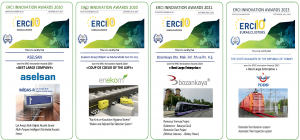
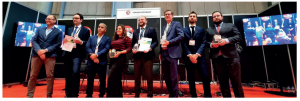
To date, ARUS members have to date won four ERCI European Innovation Awards and two prestigious Frost & Sullivan awards (European Company of the Year and European Leadership Award in Intelligent Transport Systems). Aselsan won a European innovation award for its Railway Fibre-Optic Sensor-Based Intelligent Monitoring and Warning System project; Enekom for its Rail Acoustic Railway Track Break Detection System project; Bozankaya for its battery-powered new-generation electric tram project; and TCDD–TÜBİTAK RUTE for its Train Recognition System project. In competitions organised by Frost & Sullivan, Bozankaya received the European Company of the Year award and Kent Kart the European Leadership Award in Intelligent Transport Systems, thereby proving their success on the international stage.
ARUS – The First Cluster in Türkiye with Silver Quality Certificate
In 2022, within the framework of the European Cluster Excellence labelling carried out by the European Secretariat for Cluster Analysis (ESCA), ARUS became the first and only cluster in Türkiye to be awarded the “Silver Quality” certificate, thereby crowning its tenth anniversary.
International Certification Studies
Under the ARUS umbrella, consultancy services have been provided that have made significant contributions to members obtaining IRIS, TSI, ECM and EN 15085-2 welding manufacturing certificates. As a result of the studies and guidance provided, 69 members have obtained the EN 15085 welding manufacturing certificate, 42 members the IRIS certificate, 15 members the TSI certificate and 24 members the ECM certificates, thereby completing the certification process. Approximately 100 members have received foreign-trade training for needs analysis and export development purposes, and all training requests from members are evaluated and met.
ARUS on the Management Board of the National Rail Systems Test and Research Centre (URAYSİM)
The URAYSİM project is one of the vision projects of Türkiye’s domestic and national production model understanding that will make the country one of the world’s leading centres in the field of rail systems. The project will make Türkiye one of the most important players in the international rail systems market and will carry the country to higher levels in this field. URAYSİM was included in the 2012 State Planning Organisation investment programme. Within the planning for the centre’s entry into operation, 23 research assistants selected from the field of engineering diciplines were sent abroad in 2013 to pursue master’s and doctoral studies. The foundation of the test laboratories was laid in 2016 on a 700-decare site allocated in Eskişehir Alpu and completed in 2019. In 2023 URAYSİM was brought within the scope of Law No. 6550 on the Support of Research Infrastructures and acquired legal personality. In this context a new board of directors was formed, and in 2026 ARUS was appointed to the URAYSİM management by the Ministry of Industry and Technology.

Exporting Rail Systems to the World
In 2018, within the scope of the Bangkok Green Line metro project, Bozankaya produced 22 metro train sets (88 cars), each consisting of four cars, together with Siemens, and 105 metro car bodies for the Bangkok Blue Line. These vehicles are now in service in Bangkok. In 2025 Bozankaya won a further tender with Siemens for 159 metro vehicles. In this project the metro vehicles will be manufactured at Bozankaya’s Sincan facilities, while infrastructure and signalling works will be carried out by Siemens.
Having started exports to Romania in 2019 and subsequently winning additional contracts for a total of 84 trams, Bozankaya has also won tenders for 50 trams for Italy, 25 for Serbia and 10 for Poland, and has manufactured and exported the majority of these vehicles. Durmazlar won tenders for 12 Panorama trams in Poland in 2018 and 13 Panorama trams in Romania in 2020 and exported all of them. All the manufactured rail system vehicles are currently in service in Romania, Poland, Italy, Serbia and Thailand, and the volume of exports continues to increase every year.
Our freight wagon manufacturers including Gökrail, Vako, Erciyas, Acarlar Vagon, Railtur, Özbir, Esray and Epsilon export freight wagons amounting to €150–200 million annually. Numerous ARUS members export rail system equipment. Leading Turkish construction companies in the sector—Yapı Merkezi, Gülermak, Doğuş, Limak, Rönesans, Kolin and Mapa İnşaat—are realising metro, tram, conventional railway and high-speed train infrastructure projects across a wide geography extending from Asia to Africa, from Europe to the Middle East.
Having rapidly demonstrated their success on the international stage, ARUS members realised rail system exports exceeding €1 billion in 2025 to a total of 25 countries ranging from Romania to Thailand, from Poland to Tanzania, from Ethiopia to Morocco, from Ukraine to Italy, and from Qatar to Saudi Arabia, including infrastructure. In addition to members who have achieved major export success in vehicles, wagons and infrastructure systems, many members that manufacture critical components, sub-components, interior and exterior fittings and traction motors in accordance with international standards continue to export as suppliers to the world’s major vehicle manufacturers.